



Coffee Tour & Knowledge
A guided walk through our plantation


Come and discover the world of coffee at Finca Los Castaños!
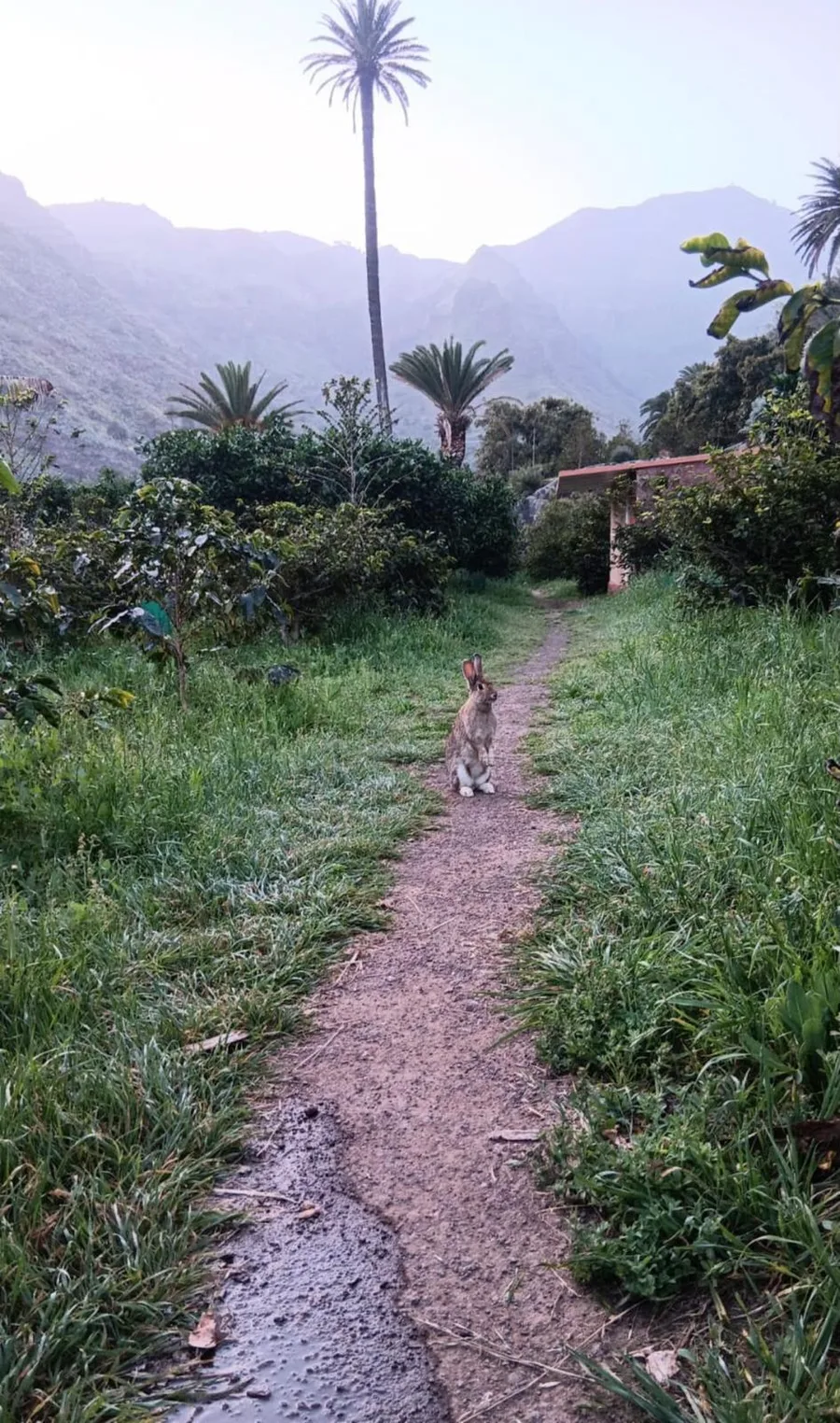
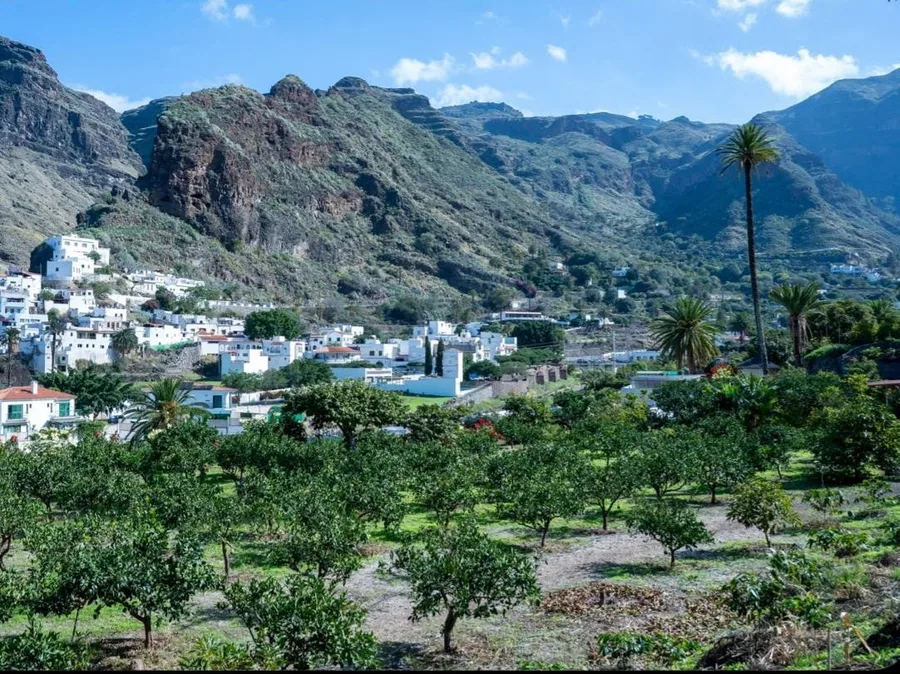
During this guided experience of approximately 40–45 minutes, you'll walk through our coffee plantation in the beautiful Valle de Agaete – one of the few places in Europe where coffee is still grown in the traditional way.
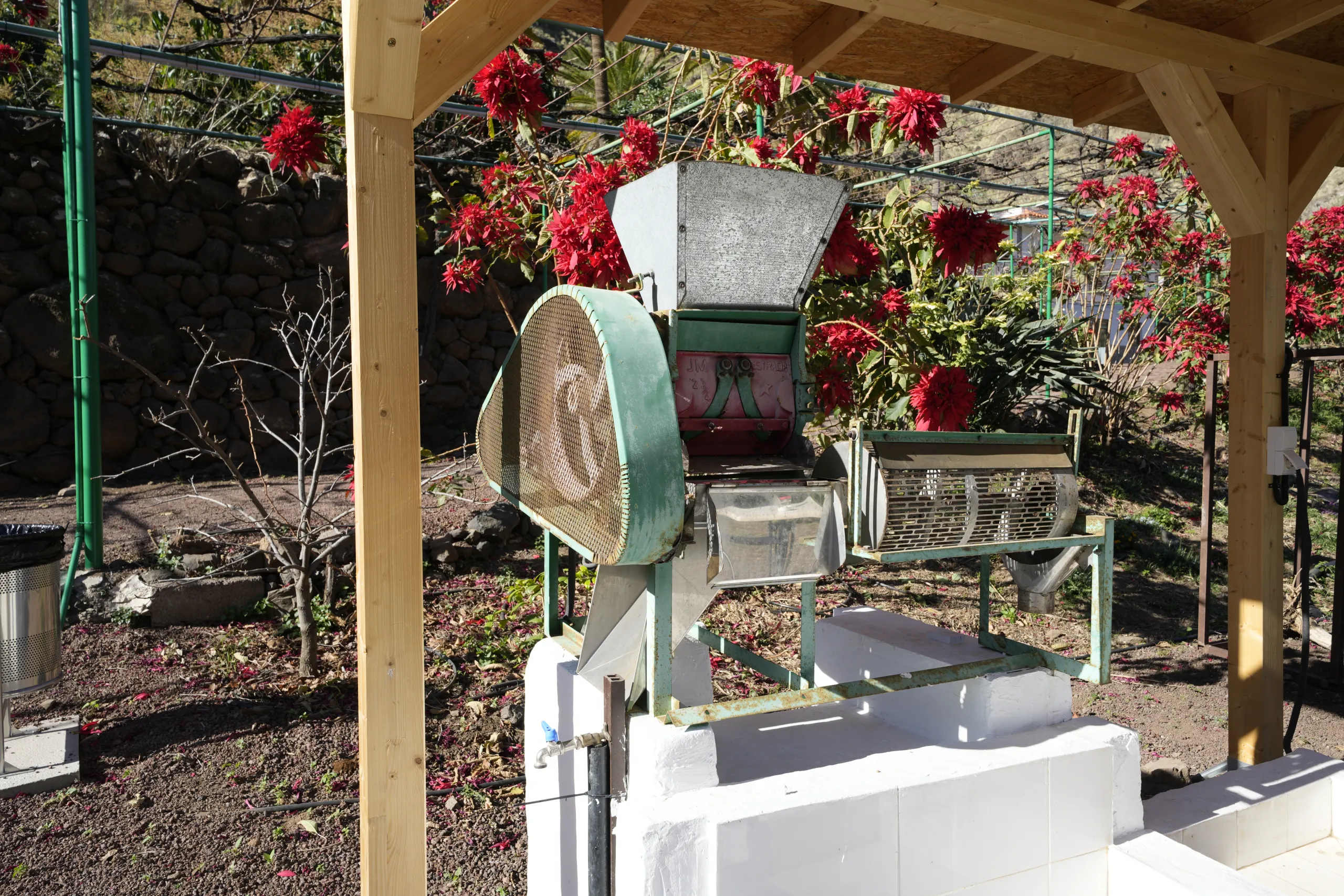
Along the way, our guide will passionately explain the entire coffee process – from growing the plants to harvesting, drying and roasting the beans. You'll discover how the valley's volcanic microclimate influences the coffee's flavour and what makes cultivation in this unique place so special.
You'll stroll among the coffee trees, get to know the plants up close and learn how each bean goes through a careful artisanal process before it reaches your cup.
The visit ends with a tasting of our freshly roasted coffee, prepared right in front of you while we explain its aromas and characteristics.
After the tour, you can also visit our little shop and take home our freshly roasted coffee and other local products.
An ideal experience for coffee lovers, curious travellers and anyone who wants to discover one of Gran Canaria's best-kept secrets.

Two centuries of coffee history
A tradition that took root in the valley
The Valle de Agaete preserves one of Europe's most singular agricultural histories: coffee has been grown here for more than two centuries. The tradition is still alive and thriving thanks to the efforts of some fifty local families.
Coffee reached the island in the 19th century. According to historical records, it was King Carlos III who promoted the introduction of exotic species to the Canary Islands. Thanks to this initiative, crops from the Americas and Asia were acclimatised at the Jardín de Aclimatación de La Orotava in Tenerife, from where they spread to different parts of the archipelago.
While elsewhere on the island – despite its fourteen climate zones – attempts at cultivation never took hold, in the Valle de Agaete, sheltered from the ocean winds, the natural conditions and the work of the farmers allowed coffee to take root and thrive.
During the 20th century, Canarian agriculture underwent profound changes. Most coffee farms were replaced by more profitable crops such as bananas or tomatoes, depending on the district. Coffee production used to be far greater, reaching several tonnes. In the late 19th century, Agaete's coffee began to attract international attention and was even presented at the 1889 Paris World's Fair, where it won a bronze medal.
Today, cultivation is limited to small plots passed down from generation to generation, mainly for family consumption. It is precisely this small-scale production that has preserved a unique agricultural tradition to this day.
The coffee grown in Agaete belongs mainly to the species Coffea arabica, variety Typica – one of the oldest in the world and now rarely found on large commercial plantations. In Agaete it grows at an exceptionally low altitude, between 150 and 400 metres above sea level, whereas in most producing countries coffee is usually cultivated between 600 and 1,300 metres or even higher.
The growing conditions give this coffee a unique sensory profile. The Catalan expert Albert Solà i Trilla described it as a coffee of great quality, greenish-yellow in colour, with aromas of green fruit and a fruity, sweet flavour reminiscent of chocolate and liquorice. Other tasters also identify notes of mandarin, cinnamon and various fruity nuances.
Experts can also detect notes of chocolate, red berries, citrus, nuts and even tobacco, at times accompanied by a delicate mineral nuance.
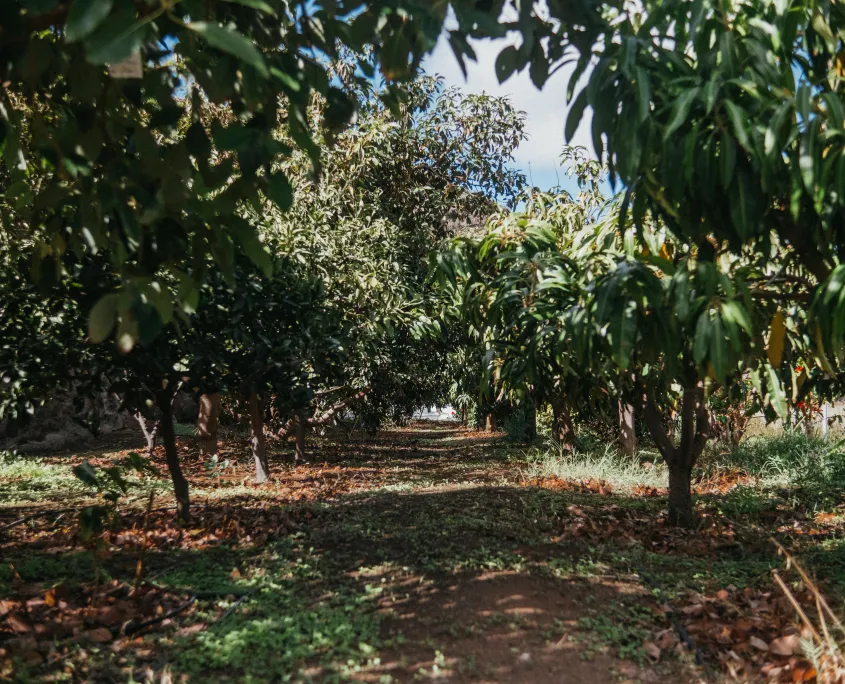
The traditional system of shade-grown polyculture – alongside banana plants, orange, mango and avocado trees – protects the delicate coffee shrubs, understorey plants with a taproot that cannot tolerate excessive sun exposure. At the same time, the slightly acidic volcanic soils, rich in minerals and trace elements, make a decisive contribution to the quality of the coffee. These elements encourage the formation of complex aromatic and flavour compounds in the bean, giving the drink greater depth, intensity and richness.
Coffee releases more than 800 aromatic compounds – more than wine – which explains the extraordinary complexity of its aromas.
The soil's excellent drainage and a moderate water stress encourage the plant to concentrate sugars and aromatic substances in its fruit, resulting in a sweeter, more intense and more expressive coffee. That is why coffees from volcanic regions such as Guatemala, Costa Rica, Kona (Hawaii), Ethiopia and, of course, the Canary Islands are especially prized around the world.
For generations, the coffee cherries were carefully picked by hand and dried in the sun on traditional open-air drying beds. The coffee was barely available outside the Valle de Agaete and could only be bought directly from the growers or in small local shops.
It remains a highly prized product today thanks to its extremely small production and extraordinary quality. It has never been exported in any significant quantity: anyone wanting to taste genuine Agaete coffee had to travel to the valley and buy it directly from the farmers or in local shops.
Fertile soils and warm sunshine
Gran Canaria's uniquely varied climate makes the island exceptionally fertile – ideal for growing coffee and fruit. Geographically, the island belongs to Africa, yet politically it's part of the EU. That makes it not only the only Canary Island with coffee cultivation, but Europe's only coffee-growing region.
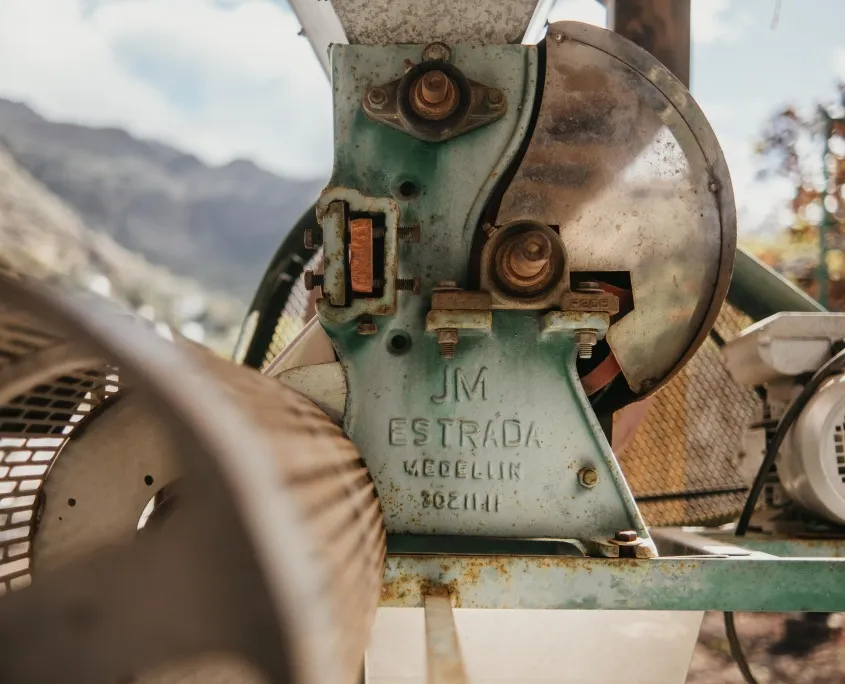

From coffee cherry to gourmet product
On our tour you'll get an exclusive look at every step from cultivation to production. Our coffee plants first produce red, cherry-like stone fruits – the "coffee cherries". They taste fruity and contain one or two stones inside, which are the actual coffee beans.
Like all fruit, coffee cherries need to ripen properly before they can be harvested from April to June. Picked too early, the coffee tastes very bitter; left too long, it turns sour.
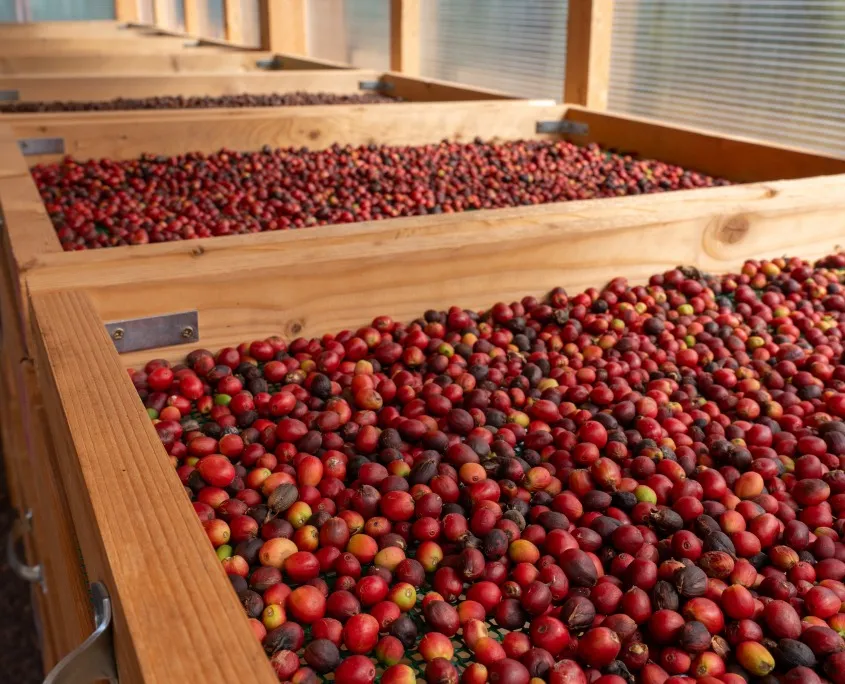
At harvest time, the deep red berries are picked by hand – slow, careful work. Yields are relatively small, so patience is a real virtue for the local coffee growers. From a bucket of berries weighing up to eight kilograms, we get just one kilogram of coffee beans.
After that, the harvested berries dry in the sun, changing colour from red and orange to the familiar coffee brown – transforming into the beans we all know.
Guided tour
of the Finca
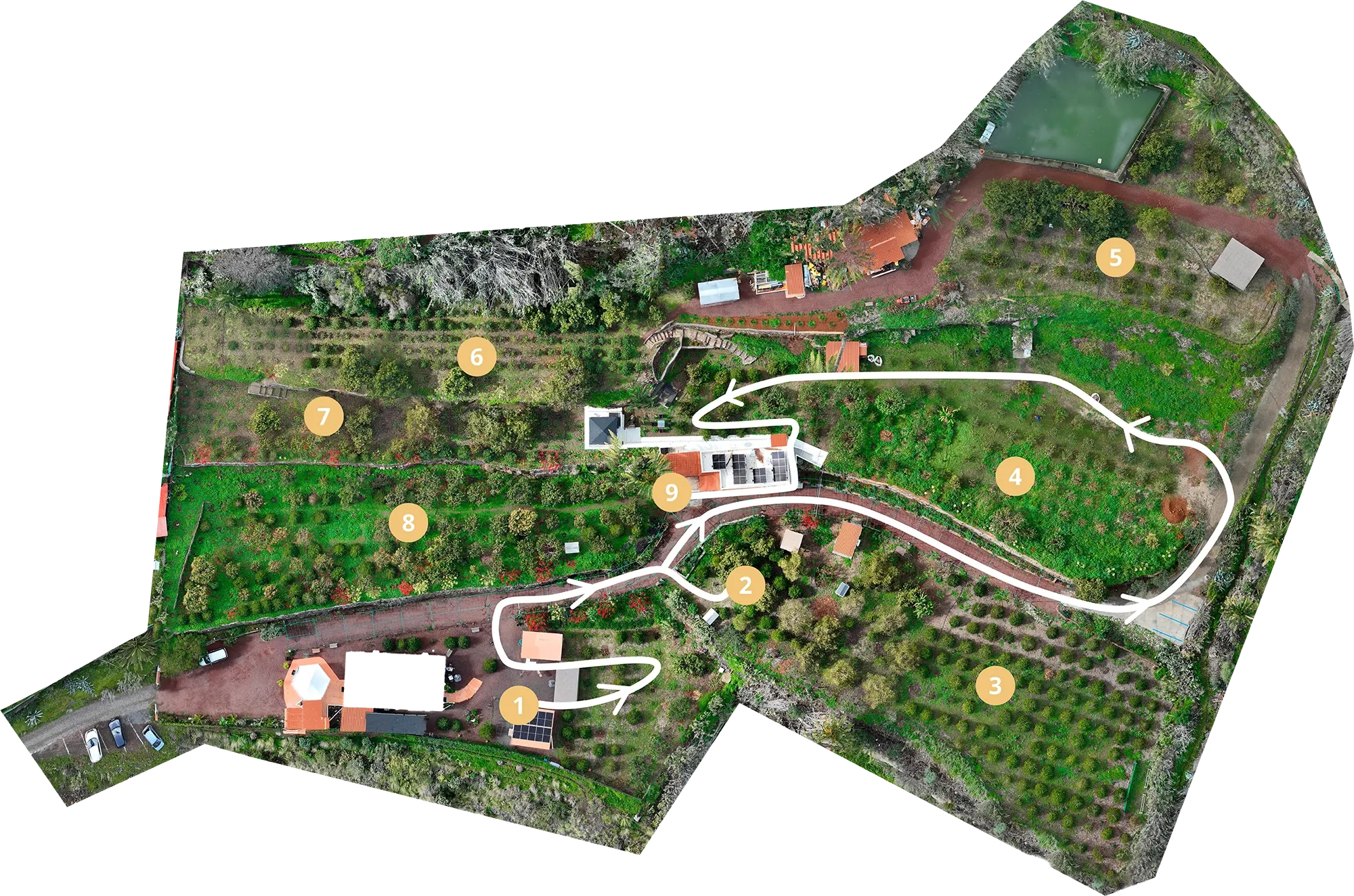
The map shows the tour stops in a schematic overview. Detailed information is available in the PDF.
Frequently asked questions
About the finca & the coffee